
The invisible weight of grief after baby loss
The loss of a baby can be devastating in ways that are difficult to put into words. For many bereaved parents, the grief they carry is not always visible to the people around them. They may appear to be managing, going back to work, caring for other children or simply getting through the day, while privately struggling with emotions and experiences that can feel overwhelming.
Fear. Guilt. Anger. Anxiety. Isolation. And often, a profound impact on relationships, identity and everyday life.
Behind every story of baby loss there are parenst navigating a deeply personal and often complex grief. And for some, that grief can become incredibly difficult to carry alone.
At Petals, we provide specialist counselling for parents affected by pregnancy and baby loss. Our counsellors understand and are specially trained the unique impact of this kind of bereavement and create a safe, compassionate space where parents can talk openly about what they are experiencing – including the thoughts and feelings they may never have felt able to say out loud.
This Grief Awareness Day, we want to shine a light on some of the things that can remain unseen after baby loss, and share the experiences of parents who have found support through Petals.
The complex feelings that so many Petals clients share
Baby loss can bring a complex mix of emotions. There is no single way to grieve, and no “right” way to feel.
Some parents may experience profound sadness or anger. Others may feel guilt, anxiety, numbness or even a sense that they have somehow failed. For many, several of these feelings can exist at once, changing from one day – or one moment – to the next.
Georgia described the guilt she carried after losing her baby:
“I carried this heavy feeling that I had let my family and my partner down; that I was the reason everyone was hurting so much.”
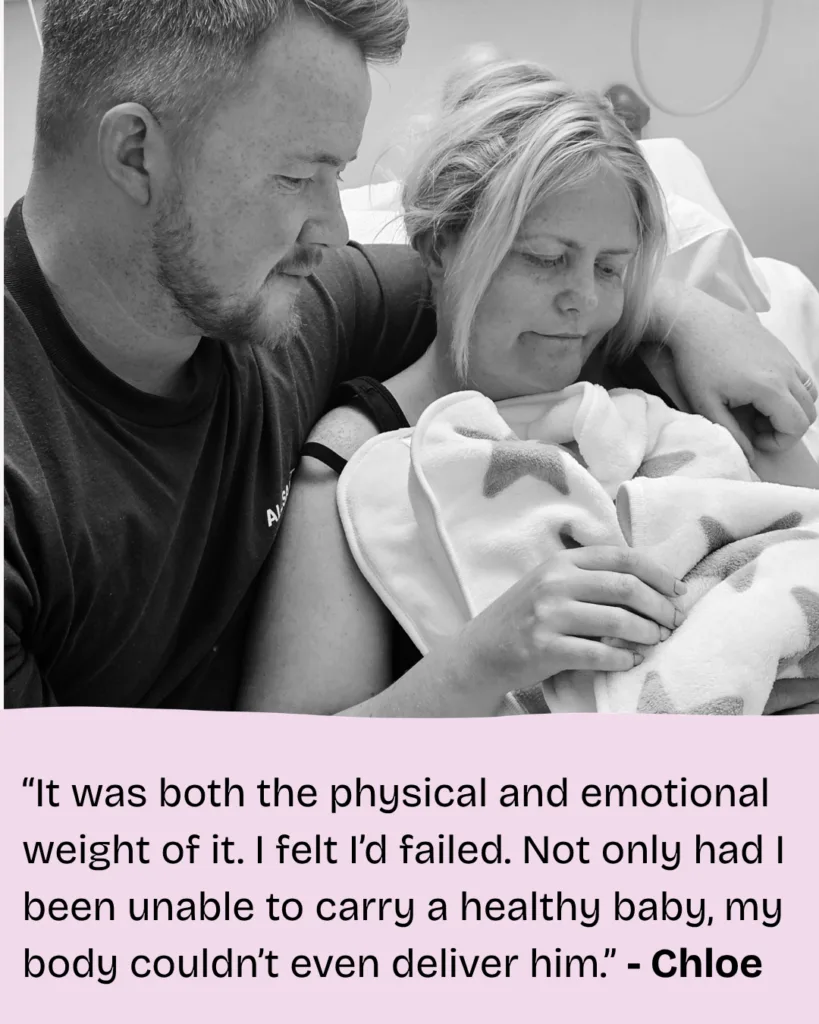
For Chloe, the loss brought a deep sense of failure connected to both her pregnancy and her body:
These feelings can be incredibly painful, particularly when parents feel they should be coping differently or worry that other people will not understand.
Grief can also affect the body and the ability to function day to day.
Georgia experienced the impact in ways that made everyday life difficult:
“I struggled to sleep, I couldn’t eat properly, I found it impossible to concentrate or find any joy in anything at all.”
Sam experienced insomnia and nightmares:
“I suffered with insomnia and when I did drift off to sleep, I was plagued by nightmares.”
For Jess, anxiety became so overwhelming that even leaving the house felt impossible:
“Our world was at a halt and I found myself struggling to complete even the most mundane everyday tasks. I was full of anxiety, leaving the house seemed impossible, and I couldn’t see a way out.”
These experiences are a reminder that grief is not simply an emotion. It can have a huge impact on how we function: it can deeply impact affect sleep, concentration, appetite, confidence, relationships, work and our ability to manage the ordinary routines of everyday life.
When grief becomes difficult to put into words
Baby loss can also feel profoundly isolating. It is hard to know how to share these deeply personal, private and intense feelings about your baby, your body, your fears and your complex feelings.
People around a bereaved parent may want to help but not know what to say. Some friends and family members may even struggle to understand why they are holding so much grief. Well-meaning comments such as “at least you can try again” or “everything will be okay”, or “at least you weren’t further along” can unintentionally leave parents feeling that their experience is being minimised.
Sumita, a Senior Petals Counsellor, explains:
“Baby loss is a profound and often misunderstood bereavement. Many parents tell us they feel isolated because, despite their best intentions, family and friends do not always understand the depth of their grief.
Specialist counselling gives parents permission to talk about their baby and their experience with someone who understands the unique impact of pregnancy and baby loss. Feeling those difficult emotions is painful but avoiding them often makes them even harder to carry.
Having a safe, compassionate space to process grief can make an enormous difference. Every parent deserves access to that support. No one should have to navigate one of the hardest experiences of their life on their own.”
Sometimes, what a bereaved parent needs most is not an answer or reassurance that things will get better. It is simply to be heard by someone who understands.
As Eleanor described it:
“The sessions gave me an outlet for my grief. Just somebody understanding your feelings during these challenging times with no fake ‘it’ll all be okay’ or ‘you can just try again’ is like receiving the biggest hug.”
How specialist counselling can help
There is no way to take away the pain of losing a baby. Specialist counselling cannot change what has happened.
What it can do is give parents somewhere safe to begin making sense of what has happened and how it has affected them.
At Petals, our counsellors understand that baby loss can involve grief, trauma, anxiety, guilt, relationship difficulties and many other complex emotions. They work alongside each parent, at their own pace, without judgement or expectation.
Petals counselling can provide a space to:
- talk openly about the baby who has died and the experience of their loss
- make sense of difficult or conflicting emotions
- explore feelings of guilt, blame or failure
- process traumatic memories and experiences
- understand how grief is affecting everyday life and relationships
- find ways to cope with difficult emotions and triggers
- begin to rebuild a sense of identity and confidence
- grieve without feeling that they have to minimise or move on from their loss
For Sam, counselling provided a way to understand the helplessness he was feeling as a bereaved father
“Petals counselling helped me make sense of emotions I couldn’t even name at the time. It gave me the space to process what I was feeling, without needing to have all the answers.”
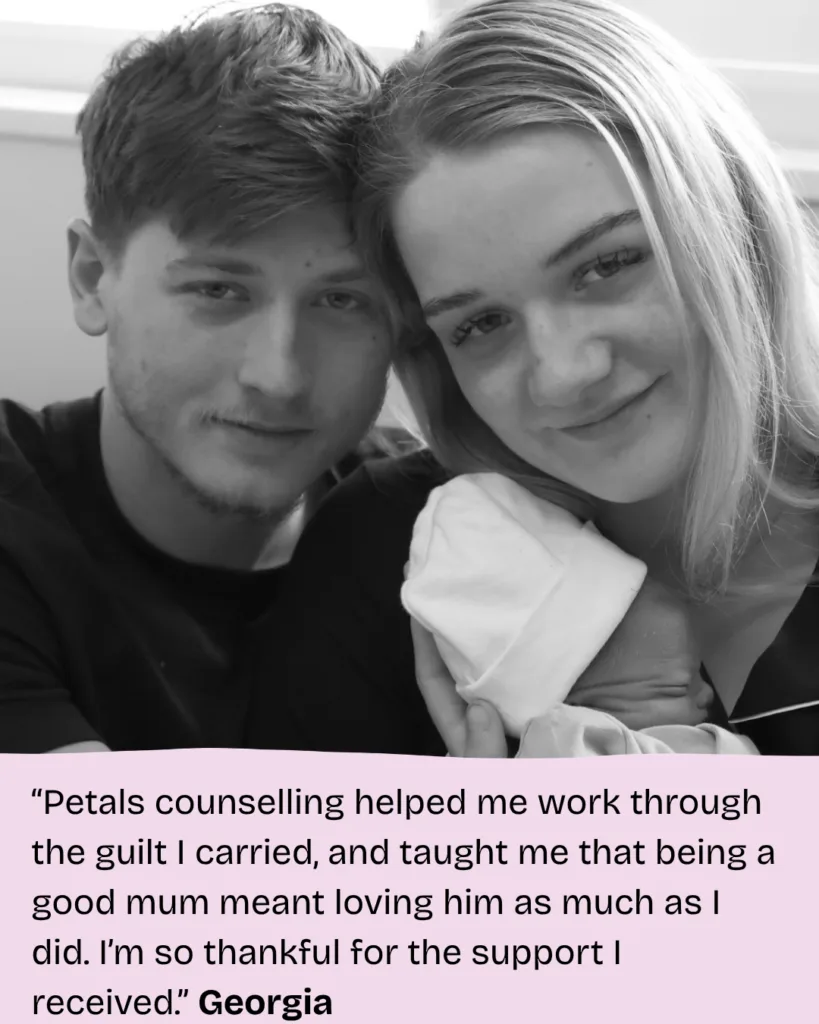
And for Georgia, counselling helped her see her reframe her grief:
How to tell if someone may be struggling with the weight of grief
Grief does not always look like crying or talking about the person who has died. Sometimes, the signs that someone is struggling can be much quieter.
If you are worried about a friend, partner, family member or colleague following baby loss, you might notice that they:
- are struggling to sleep, or experiencing frequent nightmares
- have very little appetite or are finding it difficult to eat
- seem overwhelmed by anxiety or panic
- are withdrawing from friends, family or activities they previously enjoyed
- find it difficult to concentrate or complete everyday tasks
- are struggling to return to work or maintain normal routines
- seem persistently overwhelmed, numb, angry or distressed
- are experiencing intense feelings of guilt, shame or self-blame
- find certain places, dates, conversations or situations particularly difficult
- seem to be struggling with their relationships or communicating with their partner
- talk about feeling unable to cope or unable to see a way forward
- appear to be putting on a brave face while privately struggling
Grief is individual, and everyone responds to loss differently and counselling is not something that everyone wants. But if you notice someone close to you struggling, don’t be afraid to ask how they really are.
You don’t need to have the perfect words. You don’t need to fix their grief. Listening, acknowledging their baby and letting them know that they don’t have to pretend they are okay can be incredibly important.
And if their grief feels too heavy, specialist support can help.
No one should have to carry it alone
For many parents, the impact of baby loss can last far beyond the initial days and weeks. The world may expect them to return to normal, while internally, everything has changed.
This is why specialist support matters.
At Petals, we believe every bereaved parent should have timely access to counselling from someone who understands the unique experience of pregnancy and baby loss. But there simply isn’t enough funding to make specialist support available to everyone who needs it.
That is why we are working every day to achieve our mission of ensuring that every bereaved parents has access to specialist support. We are doing this by growing our list hospital partnerships, raising vital funds through our charity pathway to reach more families, and advocating for change so that more parents can access the support they need, when they need it.
We know the difference Petals Counselling can make.
And we are incredibly grateful to every parent who trusts us with sharing their story, and to every fundraiser, supporter and hospital partner who helps make this work possible.
Because no bereaved parent should have to carry the weight of baby loss alone.
If you need to talk to people who understand, our supportive Petals groups are here: communities of other people who ‘get it’.
Search Petals Together or Petals Dads on Facebook or follow the links below. You don’t have to do this alone.